Sight for the Sightless

Tucked away in a bylane near the archaeological site Gilbert Hill at Andheri West is Andhakkshi Ashram. For the people here, their condition is not a deterrent. However they may be, they still strive to live their lives like anyone else would do.As you enter Andhakkshi Ashram, you are greeted with smiles of children and women. Andhakkshi Ashram is a Non-Government Organisation (NGO) that provides shelter to abandoned women and children.Fatima Vengurlekar, the 56-year old dedicated director gave up a career as an airhostess for Air India to pursue her inner calling – service to people. Prior to Andhakkshi Ashram, she served as a volunteer in many organisations. “Whatever you may do in life, nothing gives you more fulfilment than serving people,” says Vengurlekar.

Andhakkshi Ashram was started 1937 as a rehabilitation centre for women with schizophrenia. However, today the organisation provides shelter to destitute, blind, mentally challenged and HIV + women and children. The organisation is run by the trust The Association for the Relief and Education for the Street and Needy Blind Indian Female. “Andhakkshi that means sight for the sightless, currently houses about 40 women and children,” says Vengurlekar.

Most of the inmates at Andhakkshi Ashram are mentally challenged and have been abandoned by their families. An example is Prabha who was diagnosed with Schizophrenia and was abandoned by her family. After Prabha took to the streets, she was picked up a social worker and taken to Andhakkshi Ashram in 2002 where she was rehabilitated. Prabha is employed as a cook and that is her source of income. “Even though I am still on medication, my family respects me now because I give money at home and I am productive,” says Prabha.

Most of the women and children, says Vengurlekar, come from well to do families. Because of their mental illness, their families consider them as a liability and are ashamed to care for them. The criterion for admitting women and children into this home is that they have to be either blind, mentally challenged or HIV+. “The organisation provides many facilities that help inmates to get educated and gain skills for life that will help them earn a decent living thus making them independent,” says Vengurlekar. Anshakkshi Ashram gives these children an opportunity to live there, attend special schools and have other requirements met.

Four months back, the organisation has started Andhakkshi School that provides functional therapy for fine motor coordination. They also offer Speech Therapy for the speech and hearing impaired and Occupational Therapy to maximise the skills and ability of the differently-abled. A recent addition to the facilities is Chromotherapy (also known as colour therapy) that uses colour and light to balance energy wherever a persons body is lacking whether physical, mentally, emotionally or spiritually. “Through this physically, they feel better as their pains/aches are reduced and their immunity levels increase. Mentally and emotionally they feel secure, safe and strong. Their anger and irritability is reduced,” says Vengurlekar.

Andhakshi is dedicated to the mental and spiritual health of women and children using medication as well as alternative therapies. To widen their horizons and to reach out to more people, there is a Sacred space in Andhakshi which gives mental, emotional and spiritual guidance to people. This sacred space offers sessions and classes of alternative therapies, stress management courses, group and individual counselling and so on.

Leave a comment

Filed under Health, India

Austrian aims to make Mumbai slum-free

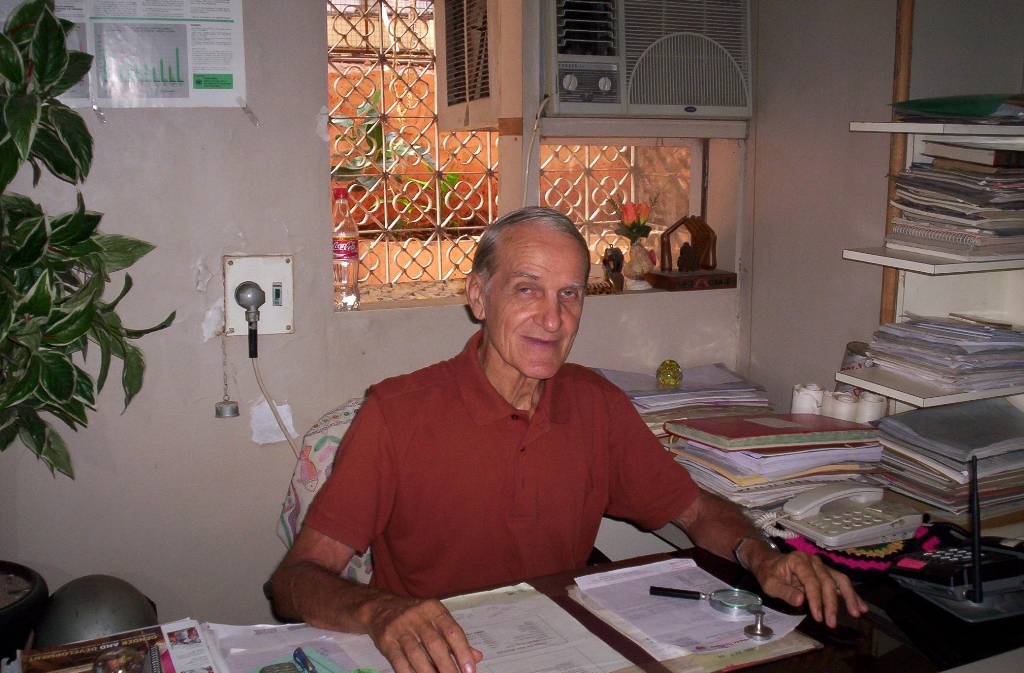
Adolf Tragler has one goal in mind – to live in a slum-free city. Keeping this motto in mind, Tragler started the Slum Rehabilitation Society (SRS) in 1972.Adolf Tragler

Tragler, born and raised in Austria, had a wish to study in a foreign country. He had many options in mind and settled for India after having visited the country along with a missionary group. Thus is 1962, Tragler set foot to India, where he completed his Bachelors of Arts from Fergusson College in Pune and then came to Mumbai to complete his Masters in Social Work from the Tata Institute of Social Sciences (TISS).

“The first time I came to Mumbai, I was shocked to see the plight of slum dwellers and that is when I decided that I had to do something for them,” says Tragler. SRS targets individuals and families who have been forced to live in slums due to the absence of affordable housing facilities.

SRS works only in Mumbai under the ‘Free Housing Policy’ of the government. The main areas of operation are Kandivali, Oshiwara, Bandra, Dharavi, Dindoshi, Mahalaxmi and Chembur. “We think of what can be done on the land that they are already occupying. In cases where the slum dwellers are occupying land reserved for open spaces then we try to relocate them to the nearest place available,” informs Tragler.

SRS normally meets the slum dwellers and helps them form an association and elect representatives from among themselves who could approach builders to rehabilitate them. According to the Slum Rehabilitation Authority (SRA) guidelines, a slum can be rehabilitated only with the consent of 70% of the occupants. If the land is a private land, the No Objection Certificate (NOC) has to be obtained from the owner of the land so that slum dwellers can apply for acquisition of the land.

When asked about the Free Housing Policy, Tragler says, “Real estate prices are skyrocketing for the common man. Why should a certain section of people get free houses? We are against free housing but we promote affordable housing. Distributing free houses is not a form of development.”

SRS adopted a slum in Mahalaxmi and each family from the slum contributed Rs. 25,000 and collected an overall total of Rs. 40 lakhs. Seeing the level of commitment, HDFC Bank sanctioned a loan of Rs. 1 crore for the project. “When people pay for their house only then they will realise the value of it,” says Tragler. “We encourage slum dwellers to develop the land they are already occupying to reap maximum benefits from the land. Getting a builder to do it often benefits the builder more than the slum dwellers,” he adds. This was the first major project approved by the SRA where residents themselves financed their own housing rather than depending on builders.

Another activity of SRS is post-rehabilitation. “There are people, after getting free houses, sell it off or lease it and come back on the road. In such cases we counsel them into keeping their own houses because a permanent residence always helps them raise their social status. However, sometimes these people need ready cash say to pay for their daughters marriage and are hence forced to sell their houses,” says Tragler. As part of post rehabilitation, SRS has also mobilised women to approach authorities for adequate water supply and cleaning drainage systems around the buildings.

Today, Tragler, aged 70 lives with his wife in Bandra and can speak fluent Hindi and Marathi. He has an Indian citizenship and visits Austria every 3-4 years to visit his family. “I have to obtain a visa like any other Indian to visit the country of my birth,” he says.

Leave a comment

Filed under India

Where History Meets the Arts

The thought of the East India Company surely brings back unpleasant memories of our freedom struggle. However, with the passage of time, the company just made it to History books. At present, the East India Company is owned by UK based Indian Sanjiv Mehta and the furniture division called the East India Company Home is owned by Anurag Kanoria.

Located in Byculla, just around the zoo in New Great Eastern Mills, stands a sprawling 9,000 square feet double-decked showroom known as the East India Company Home.

The East India Company is the oldest company in the world that was formed on 1st January 1600 when the East India Company started colonising India. During its existence from the year 1600, the East India Company specialised in the trade of several commodities such as jute, sugar, saltpetre, cotton, silk, indigo dye, opium and tea. This company even had the largest defence force. After the uprising of 1857 against the East India Company, the British monarch took away the assets of the East India Company in order to prevent the latter from becoming more powerful. About four years ago Sanjiv Mehta acquired a 100% share in the East India Company from the original heirs. The furniture division is owned by Anurag Kanoria.

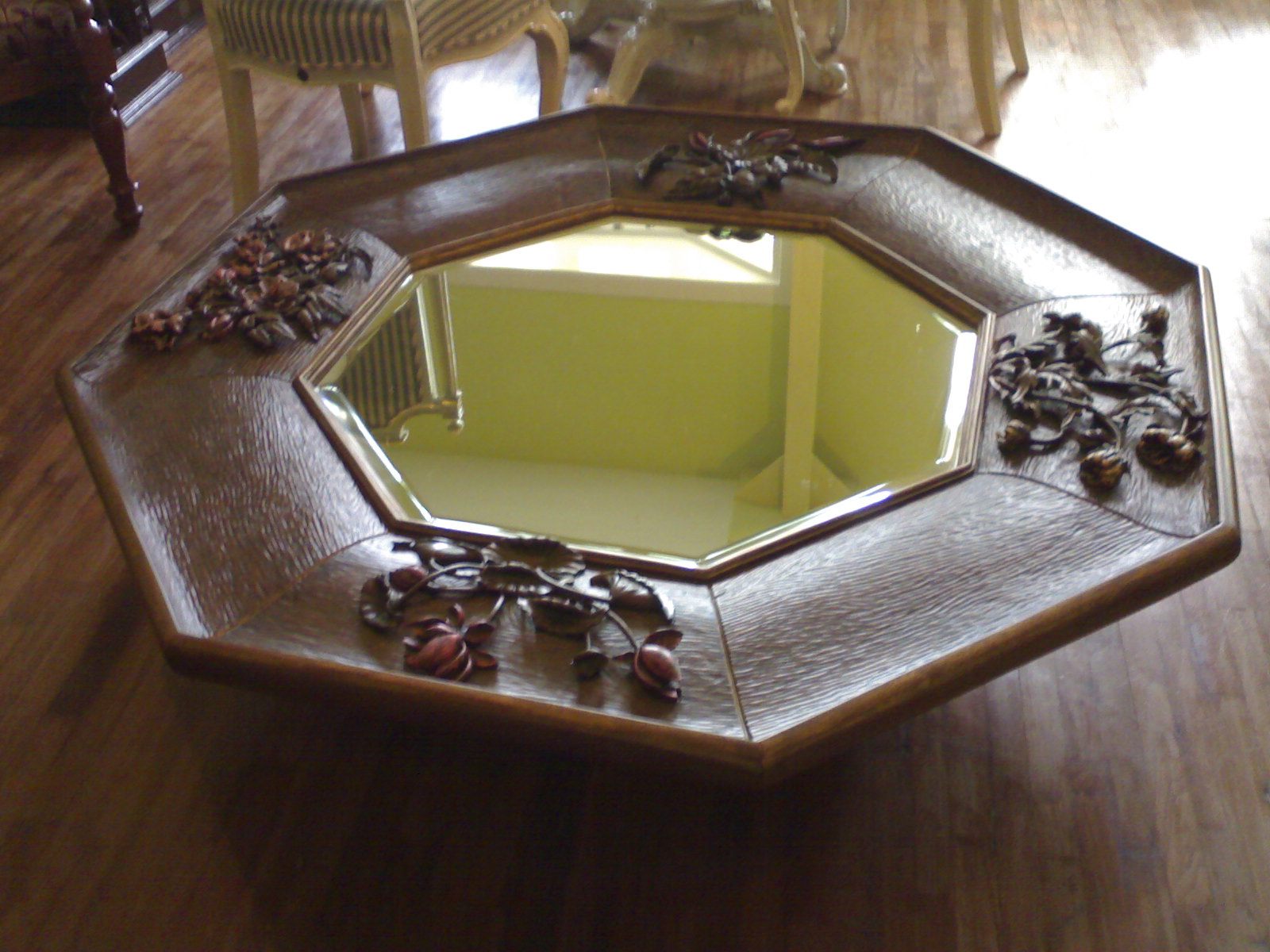
Tucked away within the premises of a crumbling mill, where the wild grass and broken walls show no sign of activity, an eager client will find his way along the tar road. The East India Company Home today, boasts of elegant pieces of furniture with intricate works of art handmade by their own carpenters and craftsmen. “Each piece of furniture is made of rosewood, walnut wood or Burma teak which is of very good quality,” says Anurag Kanoria, the owner of East India Company Home.

The East India Company has its head office in London. The company showrooms are currently in Mumbai and in Riyadh in Saudi Arabia. The third showroom will open shortly in Thailand. By the end of next year, the company plans to open showrooms in London, New Zealand, Moscow and the United States of America.

Konoria holds a master’s degree in Aesthetics and doctorate in Literature with Aesthetics as a specialisation. Thus, giving him an edge in furniture design. Kanorias furniture company earlier specialised only in high end furniture and interiors. After taking over the furniture division of the East India Company, Kanoria began to stock premium antique furniture.

Every piece of furniture is crafted in a limited edition. “Since the clients pay a premium for our furniture, they expect exclusivity from us. Therefore, we do not repeat models. If it is single model furniture, we do not make more than 12 pieces. However, the higher the price of the furniture the lesser number of units are made,” says Kanoria. “Even if we do repeat the furniture, we ensure that it is well spread out and does remain in the same showroom. In this way, the chance of someone spotting an identical piece is negligible,” says Kanoria.

The store is not just unique for its furniture but also for its collection of crockery and panels. Right from dinner plates and side plates of 22 carat to glasses, candle stands and napkin rings; the store has it all. Each dinner plate is hand painted. Even the embroidery and crochet on the upholstery of the furniture has been completed manually.

The store also specialised in Art Nouveau style of furniture. “We are the only manufacturer of art nouveau style furniture in the world,” says Kanoria.

Wood being the core raw material for the furniture could pose as an environmental hazard. “We are an environment friendly company. We make use of recycled wood obtained from government authorised plantations,” says Kanoria. “90% of the wood that we use is obtained from the wood that has been used in buildings. There are many buildings built during the British rule, which are now being demolished. The quality of wood back then was very good. Our evaluators evaluate the wood and then recycle them for making furniture,” he adds. The variety of recycled wood is Burma teak.

The furniture sold by the company is very elaborate and given the fact that real estate prices are increasing at an alarming rate, people try their best to save every inch of space. “Our clients include industrialists, NRIs, expatriates and people across the world that has sprawling houses and spending power. We advise people to take crockery or just single unit furniture in case they have a space crunch,” says Kanoria. Since the company also deals with interiors, the company provides flooring, upholstery, curtains, lights and taps that would suit the theme of the furniture.

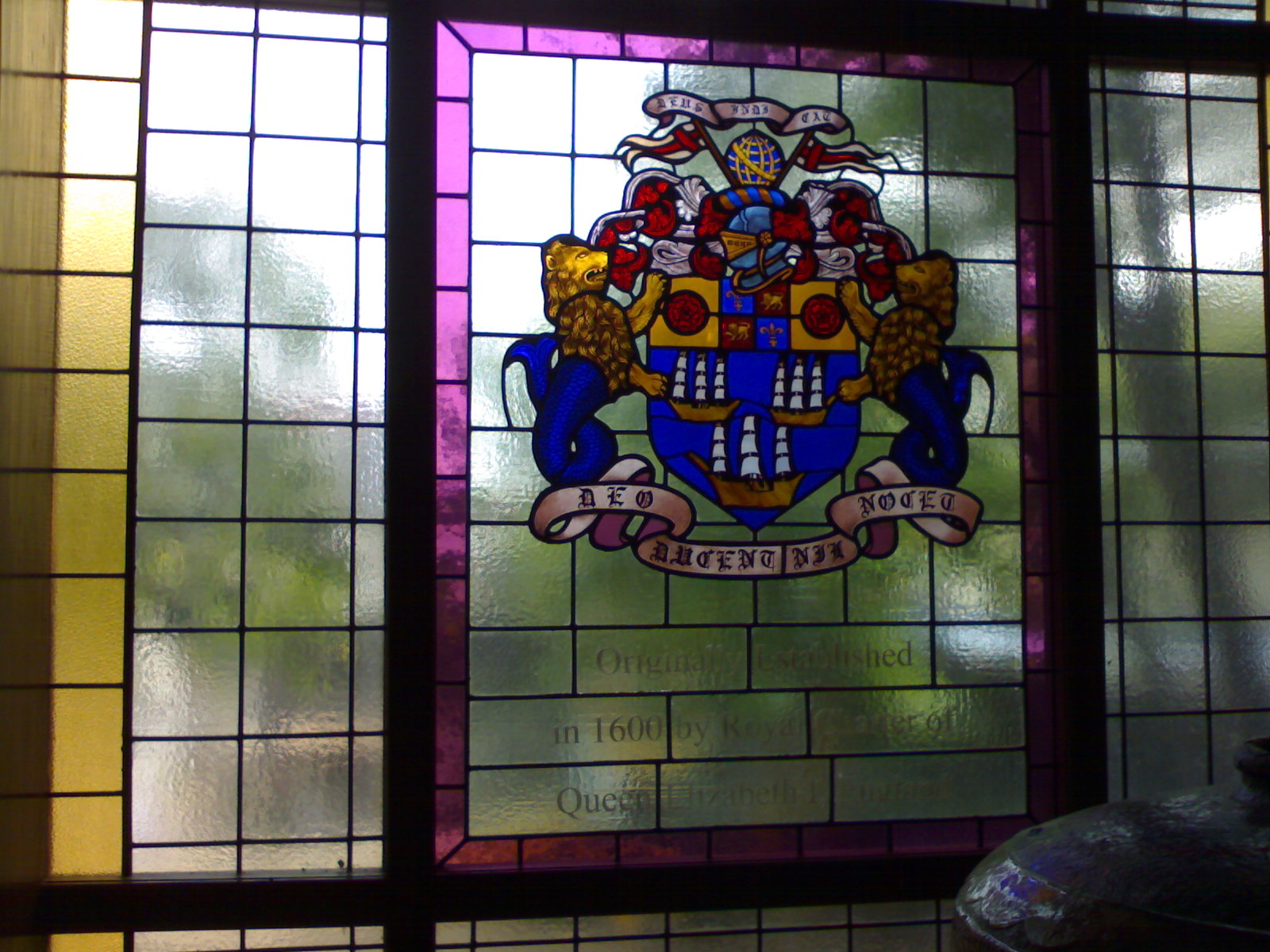
Kanoria feels very privileged to be associated with the East India Company. “The name of the company holds a lot of weight and depth. Not only does it carry along with it history and culture but also a feeling of nostalgia and worth,” says Kanoria. queens charterAs the owner of the East India Company Homes, Kanoria uses the symbol of the Royal Charter of Queen Elizabeth I. Thus, on the first floor landing, there is a stained glass window with the imperial Coat of Arms of the East India Company with the words “originally established in 1600 by a Royal Charter from Queen Elizabeth I”. In addition, Kanoria is one among the privileged few to have access to archives of the Royal family and of the East India Company in London. Sourced from the archives, hanging on the walls of the showroom are black and white photographs and maps of the East India colonies and books on the company history are placed on the tables kept on display.

4 Comments

Filed under Art, India, UK

Signs of Change: The SMS Way

Thirty-five year old Divya Bhandari was born with a severe hearing impairment. Divya Bhandari (in blue)Today, in spite of being unable to hear or speak, she has no qualms about confidently approaching people with a bright smile and handing over her business card for Divya Soft Toys, an initiative she took to venture into the world of business thus making her self-reliant and financially independent.

Being handicapped in India is discouraging due to scarcity of good jobs for challenged individuals. Despite her limitations, this Andheri resident has completed her SSC from the state board and went on to complete her diploma in Home Science. In addition, she developed new skills by enrolling herself in short term Yoga, beautician, soft toy making and computer courses. Her small home-run business enterprise keeps her totally occupied. During the lean season, she prepares herself to organise exhibitions and to sell her soft toys during the busy seasons. “I am completely independent. I can travel all over the place even in an auto rickshaw without getting cheated,” says Bhandari in sign language. “I do my own shopping and purchase things only on maximum retail price,” she adds.

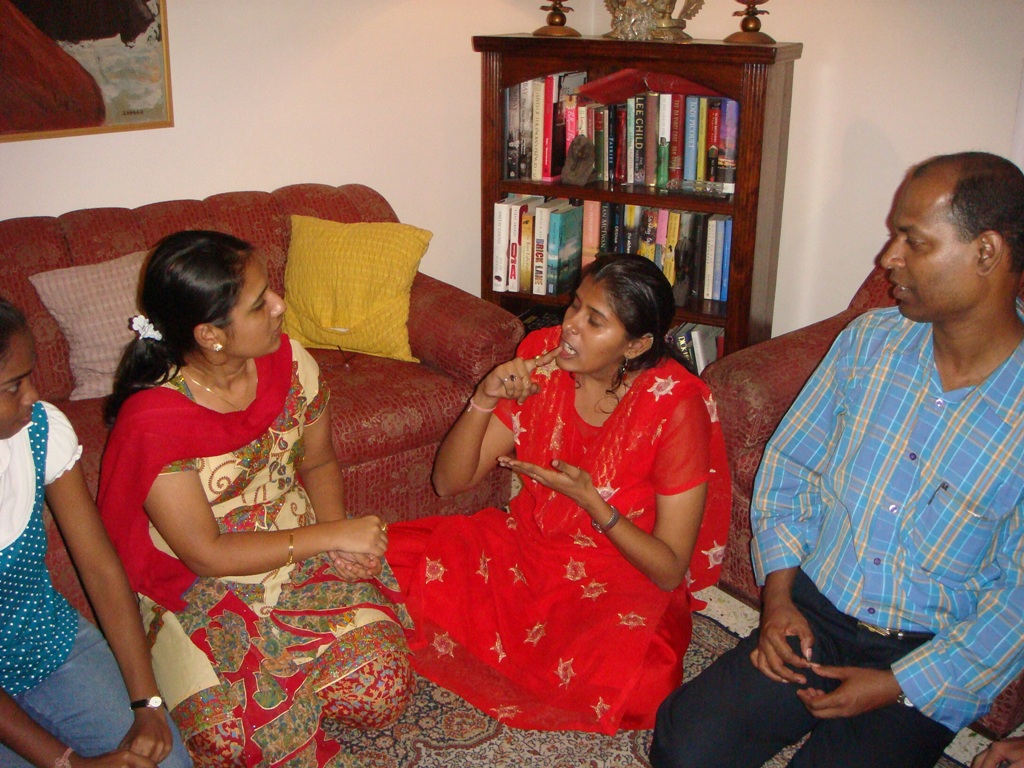
Bhandari is blessed with many friends who have hearing impairment and they have all come together to form a support system for one another and for other individuals with such impairments. Pragati Shah and Ashutosh both aged 21 recently joined the group. While Ashutosh is currently taking lessons in computer animation, Shah has successfully completed her graduation in Economics. “All this while I used to travel alone by bus from my home in Andheri to college in Malad. It is only now that I have started going out with people like me and learning to become self reliant,” says Pragati Shah.

The oldest in the group are 40-year old Ajoy Kumar and Mandeep Chawla. Kumar is married and works at a petrol pump. His wife and children are hearing individuals and have learnt both the American Sign Language and the Indian Sign Language to communicate better. Chawla studied at the English Language Institute at Gallaudet University in Washington D.C. He is currently involved in his family business.

Despite of their limitations, these individuals make an earnest attempt to speak. For Bhushan Yadav and his younger sister Shweta Yadav, their parents were very strict and did not allow them to completely depend on sign language. Instead, the brother-sister duo studied in a regular school and can converse with speech irregularities. Today, Bhushan works as an editor for a popular television production house and Shweta is in college.

Among the hearing impaired, age is no bar. “Even though I am 40 and the youngest one is just 21, there is no generation gap between us as we can connect with each other very easily. We hang out together and help one another,” says Ajoy Kumar. “Our condition brings us closer to each other,” adds Chawla. Kumar, Chawla and Bhandari being the older ones have seen much of life and often help the younger ones in all ways whether it is looking out for a job or even if it is about self reliance and independence for daily living.

“The mobile phone has helped us tremendously. Since we cannot speak on the phone, SMS is the biggest blessing to us,” says Vaibhav Darkonde who assists a doctor. “Earlier we used to ask out family members to pass on our messages to one another but now, we plan our meetings and outings on our own through SMS,” adds Radhika Goyal.

One of the biggest hurdles these hearing impaired individuals have to tackle is lack of disabled friendly facilities. “I completed my Std. X from a school for the deaf in Juhu but I had to move to a regular college as there were no colleges exclusively for the deaf,” says Pragati Shah. “However, my classmates and professors were cooperative. I used to copy notes from their books and if I had doubts used to write down my queries to my professor who used to reply in writing,” she adds.

This group of hearing impaired individuals meet informally every alternate Sunday in Andheri. The main purpose of the group is to form a support system for one another and to extend it to others like them.

Leave a comment

Filed under India

Chronicles of a Story Teller

As Russi M Lala, veteran journalist and author walks into the Princess Victoria Memorial Gymkhana near Churchgate, delighted cries of “Russi, Russi” greet him from all sides. Russi LalaPeople walk up to him and shake his hand. He answers them all with an old-world friendly formality that seems to be characteristic of him.

It is difficult to associate this lively 78-year-old with age or disease. And yet for Lala, his battle with cancer has been the turning point in his life. “I was in the lift one day, when I felt the lump on my neck,” he says. Lala was diagnosed with Non-Hodgkin’s lymphoma, but he was not disheartened. JRD Tata, whose biography has been written by Lala, was the person who sent him abroad for treatment. “My confidence stemmed from my ignorance,” he recalls. “I was so stupid and busy that I did not realise the gravity of the situation. But when the treatment started, it was horrible.” Lala gives credit to Freny, his wife, for having been his strength and support during those trying times. To this day, the love and affection that he feels for her is visible. He revels in pampering her and being attentive to her every need.

“When cancer strikes, your approach to life and your own personality come alive. You focus on what you are within yourself,” he says. “The disease was an interruption in the busy hum of my life.” His positive attitude not only got him through the ordeal of the disease, but also inspired others around him.

Vandana Gupta, another cancer patient, who met Lala during the course of her treatment, had completely lost hope in life. Her conversations with Lala gave her back her zest for life and she went on to start a support group for cancer patients called ‘V Care’. Lala later wrote Celebration of the Cells, which is a book about his battle with the disease. The book is in the form of letters to Vandana Gupta. However, the book that he is best known for is Beyond the Last Blue Mountain — The Life of JRD Tata.

Lala considers himself quite fortunate for having got the opportunity to interact with JRD, and he is obviously very influenced by him. “He was a great human being. To have known him and been with him was a source of refinement,” Lala says. He recounts how while working on the biography, he had told JRD, “I am neither going to call you good nor great. Let the reader judge,” to which JRD responded with “That is as it should be”.

Lala started his career as a journalist with newspapers like the March and the Current in 1948 at the age of 19. “At that time, there was hardly any competition and very little advertising. We refused to print cigarette and liquor ads,” Lala observes. He has seen the field grow over the years and feels that journalism today is lighter and more interesting. He became the manager of the first Indian publishing house in London, the Asia Publishing House, and by 1964, he had co-founded the Himmat Weekly with Rajmohan Gandhi. “I was the only investigative journalist then,” he says.

His work in the Himmat Weekly was highly appreciated by the then director of the Tata Company, SA Sabavala, who invited Lala to write about the Tatas. This marked the beginning of his association with the company. Lala liked meeting people. “As an editor, I would meet people very often, but now, I am unable to go out frequently due to old age and illness,” he says. He wrote about 26 personalities, whom he had met during the course of his life and career in his second book, titled, Touch of Greatness: Encounters with the Eminent. Vinoba Bhave, Mother Teresa, Dalai Lama, Jayprakash Narayan and many others he met have inspired him.

Once with the Tata company, he served as director of Sir Dorabji Tata Trust for almost 18 years. He helped in setting up the JRD Tata Centre of Ecotechnology in Chennai and the Sir Dorabji Tata Centre for Research in Tropical Diseases. At present, he is the Chairman of the Centre for Advancement in Philanthropy in Mumbai, an organisation that assists other philanthropic institutions by advising them on various issues like legal matters, fund raising and so on. Currently, he is working on his next book, The Role of Purpose in Life.

His encounter with cancer led to the renewal of his faith in God. “When I was undergoing the last radiation, I suddenly realised that there is nothing more important than God. That moment of realisation has been the most important in my life,” he says. Today, Lala begins each day in solitude to strengthen his faith. Lala advises, “Live each day as if it were your last. You will then have no regrets, no enemies — only peace of mind.”


1 Comment

Filed under Health, India

“I find satisfaction in teaching underprivileged children”

Maria D’Souza, a resident of Bandra retired from St. Stanislaus High School in May 2008 after completing a fruitful teaching career of 21 years.Maria Dsouza

Post retirement, life could not get any better for this teacher who taught English and History to students of Std. 10th in addition to music and drama to students of St. Stanislaus High School in Bandra. D’Souza joined the Bandra based NGO Aseema that is an educational centre for street and underprivileged children as an education officer. D’Souza now teaches at the Pali Chimbai Municipal School that was adopted by Aseema in 2001. In addition, she also oversees the administration of the school that currently has 426 students. The Pali Chimbai Municpal School was earlier a Marathi medium school but when English medium education became the need of the hour, many students dropped out. The school now offers education till Std. 7th with English as the medium of instruction. D’Souza now teaches English, History and Geography to the students.

“Teaching at Pali Chimbai Municipal School is a big challenge in itself. The students here are first generation learners of English and their parents don’t have a concept of education whereas St. Stanislaus was a mainstream English medium school with students who were smart and affluent and could grasp easily,” says D’Souza.

After the students complete Std. 7th, they move to the Santacruz Municipal School, another school adopted by Aseema that is located at Santacruz and offers English medium education from Std. 8th to Std. 10th.

Maria D’Souza has been associated with Assema since 1998. She used to conduct social service activities in St. Stanislaus. Post school hours in St. Stanislaus, D’Souza along with the social service students used to tutor the underprivileged students. “I feel very happy now. I now feel I should have done this long back and not waited for so long till I retire. But it is human nature to stay back for material things like pension and provident fund,” she adds.

D’Souza lives with her husband and sons at Mount Mary’s Road in Bandra. She is also an active member of the Mount Mary Road Advanced Locality Management (ALM).

Even though the children come from humble backgrounds, the quality of education they receive is not compromised upon. “Most of the students don’t understand what the teacher is teaching them. Hence, we use teaching aids like charts, slides and movies wherever possible. Recently, we conducted out first practical lesson on democracy by conducting elections for the class monitor through secret ballot,” informs D’Souza.

Aseema has several other volunteers who teach the underprivileged students. Most of the volunteers are school students who study in the International Baccalaureate board of education. These student volunteers donate their old reference books to the Pali Chimbai Municipal School Library for the use of the students.

“I find immense satisfaction in teaching these underprivileged children. Even though they are weak and backward in studies, they are very loving, affectionate and ready to learn. Even though they don’t pay high fees, they still know and appreciate the value of education. For these students, their teacher means everything to them,” says D’Souza.


Leave a comment

Filed under Education, India

The Karvi Flower Visits Mumbai

The forests of Mumbai have borne a new look. karvi 5After a long gap of eight years, the Karvi plant peculiar to the Western Ghats has bloomed. The flowers can be spotted throughout the Sanjay Gandhi National Park in Borivali and at some parts of the Bombay Natural History Society (BNHS) area near Film City in Goregaon. The last bloom was seen in August 2000.

The botanical name for the plant is Strobilanthes Callosa while the common man knows it simply as the Karvi plant. The Karvi has an interesting life cycle. “Each year, the plant comes alive with the onset of the monsoons and once the rains are over, only the dry and dead looking stems remain. Karvi 1This pattern repeats itself for seven years and in the eighth year, it blooms into mass flowering thus giving the entire area a lavender blush,” says Priti Choghale, Education Officer of BNHS. The lifespan of a single Karvi bloom lasts for 15 – 20 days. The Karvi season begins by mid-August and ends by the end of September. “After the flowers bloom, it enters the fruiting phase. The fruits take a year to dry up and will germinate by next monsoon. During the next monsoon, there will be loud cracking sounds of the Karvi seeds as they open,” explains Choghale.

The plant was first discovered by Nees, a resident Britisher of Mumbai during the last century. The plant grows about two to six metres tall while the leaves are about 10 – 20 centimetres long.

The Karvi plant has many uses. The plant prevents soil erosion. Medically, the plant also acts as a blood purifier. The leaves can be crushed and the juice when drunk is a cure for stomach ailments. After the Karvi season, the leaves and the stem are used for thatched roofs also known as Karvi Huts.

2 Comments

Filed under India

Invitations with a Special Touch

As one walks through the by lanes of C.P Tank in Girgaum and enters Khadilkar Road, a line of invitation card shops greet you on both the sides. Khadilkar Road is an invitation card market where people come from far and wide to get that special card for all occasions according to their specifications. 13032007(005)These shops also provide an array of handbags and gift boxes in addition to invitation cards. In these shops, the occasion and religion is no bar.

Meena Agencies was among the first few shops to open in the area in 1964. This retail shop stocks a wide variety of cards ranging from textile design, embroidery and handicrafts to the printing technology. “Earlier an invitation was a mode of information or an invitation. Today it has become a style statement as the invitation creates the first impression of the event,” says Anand Thakkar, the owner of Meena Agencies. This store has around 1000 different varieties of invitation cards within the price range of Rs. 5 to Rs. 150 that is affordable to the idle class society. The shop targets people who want to customize their card. “In this business, creativity and tradition have to merge,” says Gopal Shah, owner of Vardha Enterprises, a relatively new player in the industry. This shop sells cards at wholesale rates and has distributors across the country.

The peak season of business for all these shops is between March to May and October to December. The owners do not worry about competition as each shop is unique in its products and designs. Every shop is filled with customers round the clock. “I have come all the way from Mumbra to select a card for my big day. It is a tough choice as there is a wide variety to choose from and I feel like giving each of my guest a different design,” says Monisha Chatterji, a customer.

A shop that caters to high-end customers especially for the elite and Non-Resident Indians (NRIs) is Mars Arts. “Everlasting standard of quality, intricate detail workmanship and immense creativeness is the strength of our company,” states the owner, Mahavir Shah. Mars Arts has been in the business since 16 years and has established a good rapport with its customers. The company boasts of an in-house design studio and customer service centre. The price range of a card in this shop is Rs. 45 onwards. “The most expensive card we have made was for Rs. 1000. It was gold plates and had intricate embroidery,” adds Mahavir Shah.

The next time you want to send out invitation cards you know where to go to – Khadilakr Road near C. P. Tank.

2 Comments

Filed under India

Mumbai Resident Trains Autisitc Children Only

Mumbai resident, Dinesh Kumar is on a mission to impart music to children with autism. DSC01918It all began five years back, when he saw an advertisement inviting applications for the post of a music instructor for Priyanj Special School for autistic children for which he had applied. “I did not know who special children were and thought a special school is for high profile kids and for those who have extraordinary talents and abilities,” says Kumar. When he entered the school, all the children there looked like anybody else and later on got to know the condition about the children“When I began teaching, I thought that the children were deaf as I was not sure if they were listening to me,” adds Kumar. As time passed, Kumar read about autism and devised a plan of action on how to teach them.

“Initially I had to observe the behaviour of the children and see if they respond to music,” says the 30-year old Kumar. Kumar started by imparting music sense by making them clap their hands and bang the table tops to a rhythm. “If they clapped or band according to the beat or rhythm, I could gauge the musical abilities,” he adds.

This resident of Kandivali, a suburb in Mumbai now knows all the minute details about the condition of autistic children. No more does he feel as though something is wrong with them. “If the children do not respond, I feel as though something is wrong with me and my teaching,” says Kumar.

Since the students have a difficulty in deciphering the notes and chords, Kumar teaches them to play by the ear. Kumar makes it a point to teach the children popular Hindi songs. He just gives them the starting note and the pitch and they can play with ease. In order to teach the children the notes and the lyrics, Kumar has to teach them over and over again for them to retain and remember. “Sometimes it takes over a year for the children to learn one song,” Kumar mentions.

Thirty-year old Kumar feels that music has made a difference in the lives of these children. Music has increased their concentration and even started keeping eye contact with others.

Today, Kumar has come a long way. He currently teaches music to 60 children in Priyanj Special School and visits 20 children at their homes to teach them music. He plays the guitar, keyboard, bongo and the tambourine. However, he teaches the children just the keyboard as that is the easiest way the children can learn to play music.

Kumar has many invitations to teach others but he refuses as he has decided to teach children with autism. “Anyone can teach music to normal children but teaching autistic children is challenging as you have to keep up to their pace and wait for them to respond to your teaching,” says Kumar.

Kumar has also benefitted by teaching autistic children “Teaching these children requires lots of patience and tolerance and hence my patience and tolerance levels have increased,” he adds.

3 Comments

Filed under Education, India

Italian Nuns serve leprosy patients

Located in Andheri, a suburb in Mumbai is the Vimala Dermatological Centre run by the Missionary Sisters of the Immaculate which provides care to leprosy and tuberculosis patients.(l-r) Sr. Bertilla and Sr. LuciaBoth born in Italy, 69-year old Sr. Bertilla Capra and 64-year old Sr. Lucia Pala belong to the congregation of the Missionary Sisters of the Immaculate also known as PIME – Pontificio Instituto Missioni Estere (Pontifical Institute for Foreign Mission). After joining the convent, they completed their nursing courses in Italy and had a mission to serve the sick and the needy. Their compassion for fellow human beings brought them to India leaving their hometown Italy. “I had a desire to go to either India or Bangladesh to help leprosy patients because they are neglected and shunned away by society,” says Sr. Lucia. After expressing her desire, she was deputed to India in 1977 and Sr. Bertilla in 1970 to serve leprosy patients in India. The duo worked in Bimavaram at Eluru in Andhra Pradesh caring for leprosy and tuberculosis patients. Sr. Bertilla came to Mumbai in 1981 and Sr. Lucia in 1985 to join the Vimala Dermatological Centre. Their dedication towards their mission even led them to learn languages such as Telugu, Hindi and Marathi to help them to communicate better.

“In Italy, we never saw leprosy. In India, leprosy is still a stigma. Nobody is ready to help people affected with leprosy. It was difficult initially as the patients would smell and had worms all over their bodies as they lost sensation,” says Sr. Bertilla. “But it was our desire to serve these people and the dignity of the human being was much more that their dirtiness,” adds Sr. Lucia.

Sr. Bertilla and Sr. Lucia have completed 27 and 23 years respectively at Vimala Dermatological Centre. The centre was established in 1976 and has three wards for men, women and for the children of leprosy patients. The centre aims to detect all existing cases of leprosy and tuberculosis and to treat these ailments. The centre also offers hospitalisation facilities and surgical treatments as well.

“Our main endeavour is to spread awareness and educate people about leprosy. We conduct talks and seminars on leprosy care,” says Sr. Bertilla, superintendent of Vimala Dermatological Centre. To begin with the sisters clarify the myths associated with leprosy. “People believe that leprosy is a curse from God. However, leprosy is not only for the poor. It can attack anybody,” informs Sr. Lucia who stresses that leprosy is curable and does not spread through touch.

Vimala Dermatological Centre has well qualified teams specialising in medicine, surgery, rehabilitation and paramedical activities. After treatment, the patients are adequately rehabilitated. They are taught how to carry out their daily activities even if their finger or toes or limbs are amputated. Most of the patients receive help for housing, employment, loans and training in tailoring, screen printing and motor mechanics.

The centre provides counselling sessions for the families of those suffering from leprosy which includes education on leprosy. “In spite of this, some families want the patients to stay here forever and do not want to take them back home. Fear is not the key – treatment is,” adds Sr. Lucia.

Sr. Lucia feels angry with the families of the leprosy patients who refuse to touch the person or even change the bandage or dressing. “Till the 1990s, nobody ever stepped into our compound with the fear of contracting leprosy. However, now people have started coming and spending time with our patients here but they still have to overcome that fear,” says Sr. Lucia.

The children’s ward was started in order to give shelter to girls between the age of four – 15 years whose parents are suffering from leprosy and cannot afford to give them education and a decent living. 12-year old Lata (name changed to protect her identity) was in her first stage of leprosy when she came to Vimala Dermatological Centre. She was expelled from school due to her condition. After undergoing treatment at the centre for two years, she stays in the children’s ward and now goes to a regular school without traces of her past ailment.

Sr. Bertilla and Sr. Lucia visit their hometown Italy once every four years. During their visit back home, they educate the people in Italy about leprosy and collect funds to run the hospital here as they do not receive any grant from the government. Former leprosy patients have been employed in Vimala Dermatological Centre to stitch clothes, bags and make Christmas decorations. These clothes, bags and decorations are taken to Italy where they are sold in order to generate funds.

1 Comment

Filed under India